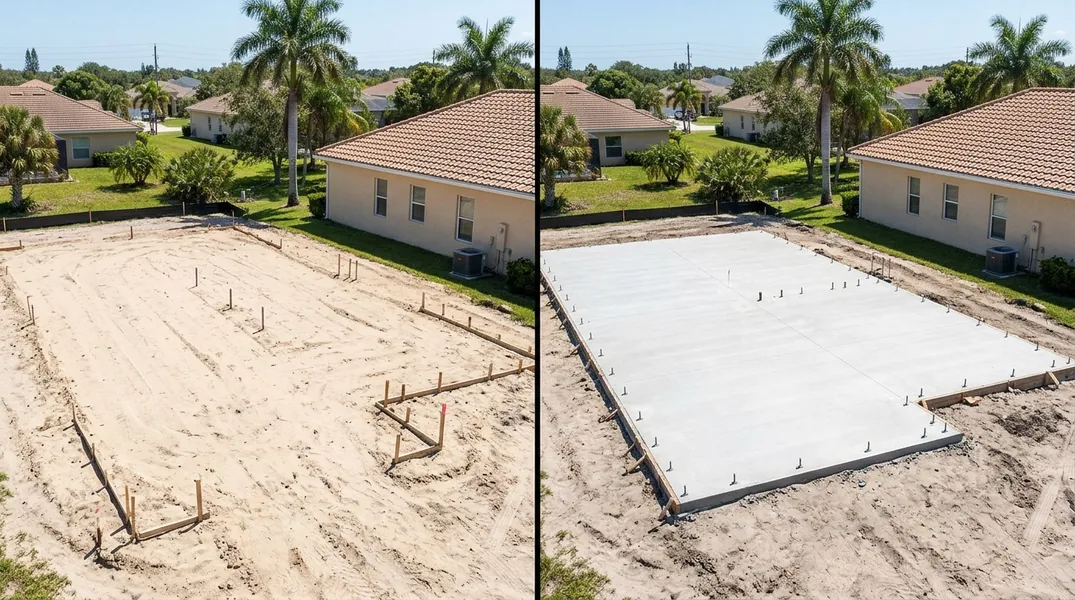
Understanding the Foundation: Why New Construction Slabs Matter
Purchasing a new home in Fort Lauderdale is one of the largest investments you'll make, and the concrete slab foundation is literally the ground your entire home rests upon. Many first-time homebuyers focus on cosmetic details like paint colors and kitchen finishes while overlooking the critical structural elements that will determine whether their home remains sound for decades or develops costly problems within years. A new construction concrete slab that's improperly installed, poorly drained, or built with substandard materials can lead to cracking, settling, mold growth, and structural damage that far exceeds the cost of proper installation.
The South Florida climate presents unique challenges for concrete slabs. Our region experiences intense heat, heavy rainfall, high humidity, and salt air that can accelerate concrete deterioration if the slab isn't constructed correctly. Before you close on your new home, understanding what to look for in a new construction concrete slab in Fort Lauderdale will help you identify potential problems early and protect your investment. This guide walks you through the essential inspection points every homebuyer should know.
Builder Slab Inspection Florida: Key Areas to Examine
A thorough builder slab inspection in Florida requires examining several critical components that most homeowners don't know to check. Start by looking at the surface of the concrete itself. Walk across the entire slab and look for visible cracks, especially any that are wider than 1/8 inch or run in patterns. Minor hairline cracks are normal in new concrete as it cures, but larger or multiple cracks may indicate poor concrete mix design, inadequate reinforcement, or rushed curing processes. Check for areas where the slab appears to be settling unevenly by looking for gaps between the concrete and the foundation walls, or by observing whether doors and windows close smoothly.
Next, examine the concrete's color and surface texture. Discoloration, staining, or areas where the concrete appears softer or more porous than others can suggest inconsistent quality or moisture problems. Run your hand along the surface to feel for spalling (where the surface is flaking or breaking apart), scaling, or rough spots. Pay special attention to the edges of the slab, which are most vulnerable to damage and deterioration. Ask your builder for documentation showing the concrete's strength rating (PSI), the date it was poured, and how long it cured before construction continued. Reputable builders will have this information readily available and be happy to discuss their concrete specifications.
New Home Slab Drainage: The Most Critical Factor
In Fort Lauderdale and throughout Broward County, proper slab drainage is absolutely essential because standing water is your concrete's worst enemy. Water that pools around or under your slab will cause the concrete to weaken, crack, and eventually fail. Before closing, verify that the ground slopes away from your home's foundation on all sides, typically at a grade of at least 1 inch per 10 feet. Walk around the perimeter of your home during or after a heavy rain if possible, and observe where water flows. If water is collecting near the foundation or pooling on the slab, this is a red flag that should be addressed before you take possession.
Ask your builder about the subsurface drainage system beneath the slab. A proper installation should include a compacted base layer, often with gravel or sand, and potentially a vapor barrier to prevent moisture from wicking up into the concrete. In our humid climate, moisture intrusion can lead to mold growth in crawl spaces and under floors, creating both structural and health problems. Check that gutters and downspouts are installed and directed away from the foundation, and that any landscaping or hardscaping like Concrete Patios or walkways also slope properly to direct water away from the slab. Request a copy of the site grading plan from your builder to confirm that drainage was engineered according to Florida building codes.
Broward New Build Concrete: What Florida Building Code Requires
Florida's building code, which applies throughout Broward County including Hollywood and surrounding areas, sets specific requirements for new construction concrete slabs. These standards exist because of our region's challenging environmental conditions. The code requires concrete to have a minimum compressive strength of 3,000 PSI for residential slabs, proper reinforcement with rebar or wire mesh, adequate curing time, and specific preparation of the base materials. Builders must also follow requirements for concrete mix design, which typically includes air entrainment to help the concrete resist freeze-thaw cycles and salt exposure, even though we don't experience freezing temperatures regularly.
Before closing, request a copy of the concrete inspection report and testing documentation from your builder. Third-party concrete testing companies often perform strength tests on new slabs to verify they meet code requirements. These tests, called concrete cylinders or core samples, provide objective evidence that the concrete was mixed and installed correctly. If your builder cannot produce these documents, it's a warning sign that proper quality control may not have been followed. Additionally, verify that the concrete slab has proper isolation joints (control joints) installed at regular intervals to allow for expansion and contraction as temperatures change. Without these joints, the concrete is more likely to crack as it expands and contracts throughout the year in South Florida's hot climate.
Common Slab Problems: What to Watch For Before Closing
Understanding common concrete slab defects helps you spot problems during your final walkthrough. Efflorescence, a white powder-like substance on the concrete surface, indicates that water is moving through the slab and carrying minerals to the surface. While efflorescence itself isn't structurally dangerous, it's a sign that moisture is present and future problems could develop. Blistering or bubbling on the concrete surface suggests air pockets or moisture trapped beneath the surface, which will eventually lead to spalling and deterioration. Uneven settlement, where one section of the slab is noticeably higher or lower than adjacent sections, can cause structural stress on the entire home and may require expensive repairs.
Cracks in a pattern, such as map cracking (many small cracks forming a web-like pattern) or cracks that follow the slab's perimeter, often indicate poor concrete quality, inadequate reinforcement, or improper curing. A single straight crack running across the slab might be a control joint that worked as intended, but multiple random cracks suggest deeper problems. If you notice any of these issues during your final walkthrough, document them with photos and video, and request that your builder either repair the slab or provide a credit toward professional Concrete Repair & Resurfacing after closing. Don't assume minor imperfections will resolve themselves; concrete problems typically worsen over time.
Getting Professional Help: When to Call a Concrete Expert
If you're uncertain about the quality of your new construction slab or you've noticed problems you want evaluated by an expert, hiring an independent concrete specialist is a smart investment. A professional inspector can perform non-destructive testing, evaluate drainage systems, and provide a detailed assessment of whether the slab meets current standards and will perform well in Florida's climate. Many homebuyers spend thousands on cosmetic inspections but skip the foundation inspection, which is backwards. The foundation is the most important structural component of your home, and getting a professional opinion before closing can save you tens of thousands in repairs later.
Fort Lauderdale Concrete has years of experience evaluating new construction slabs and identifying problems that untrained eyes might miss. Whether you need a pre-closing inspection or advice on protecting your new slab investment, our team can provide expert guidance. We recommend getting a free estimate and consultation to discuss your specific situation. You can reach us at (754) 218-2497 to schedule an inspection or ask questions about your new home's concrete foundation. Don't wait until you've closed on your home and problems have developed; getting professional eyes on the slab before you take possession gives you negotiating power and peace of mind.
Looking for a professional concrete contractor in Fort Lauderdale? Fort Lauderdale Concrete responds fast for all your concrete needs.
Get a Free QuoteOur services: Concrete Driveways · Concrete Patios · Stamped & Decorative Concrete